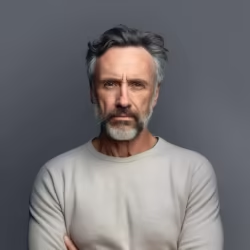
How to Pose People Naturally in Photos
A practical, inclusive posing guide for helping clients, couples, friends, models, and groups feel comfortable and look natural in photos.
Photography Tips
7 min read

Published June 19, 2026 | 5 min read
The best camera angles for portrait photography are the angles that support the person, the story, and the mood of the image. Start at eye level, keep camera height intentional, step back when perspective feels distorted, use slight high or low angles only for a clear purpose, and keep the client comfortable throughout the session. No single angle is flattering for every age, body type, gender, ability, or personality.
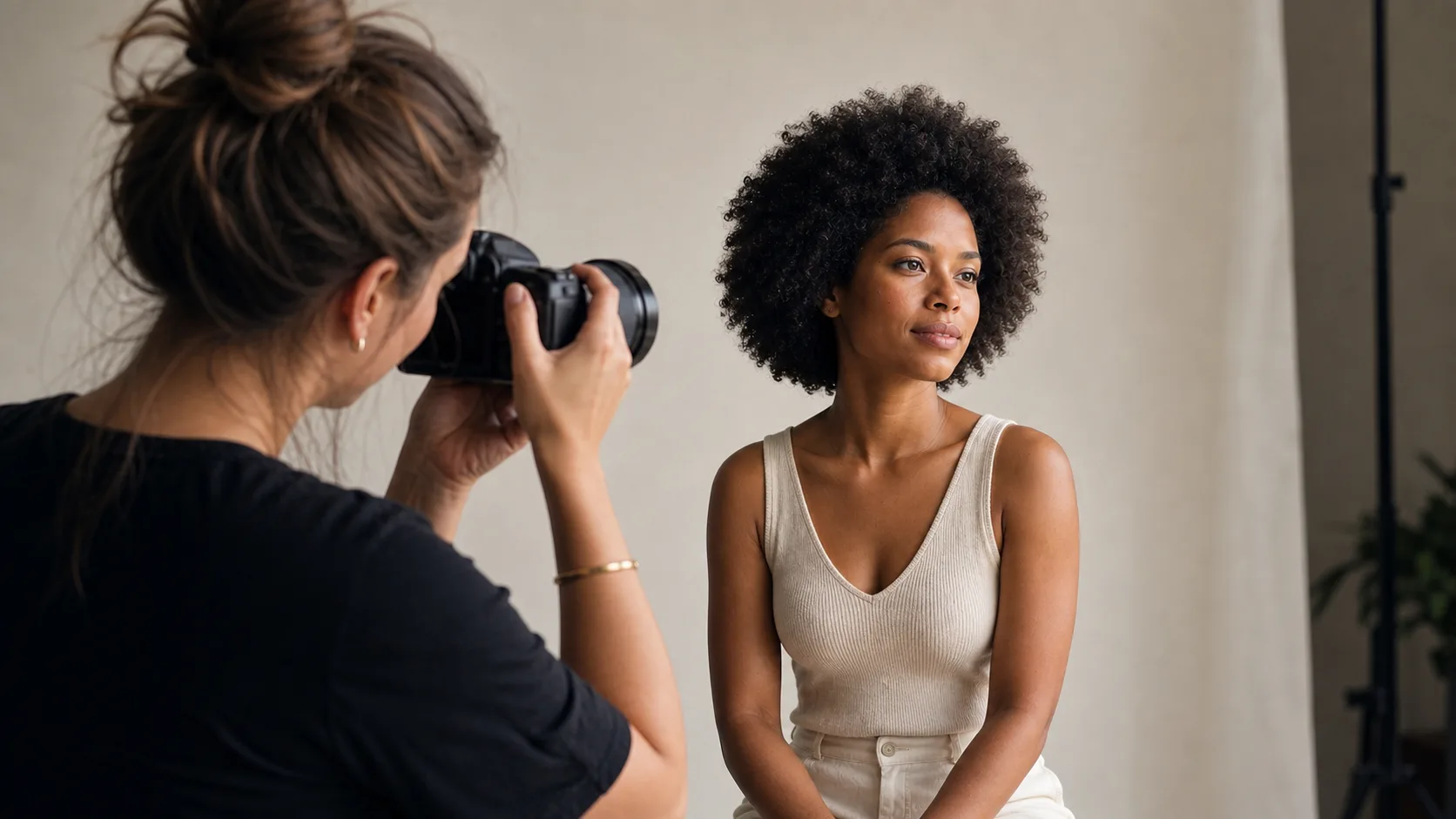 Eye level is a reliable starting point because it keeps the portrait connected and conversational.
Use case | Camera angle | Why it helps |
|---|---|---|
Natural headshot | Eye level or slightly above the eyes | Creates connection without making the pose feel forced |
Relaxed seated portrait | Slight high angle with consent and comfort | Can simplify the background and emphasize expression |
Confident environmental portrait | Slight low angle from a safe distance | Adds presence while keeping perspective believable |
Close-up portrait | Eye level with enough distance from the face | Keeps features natural and gives the client room to breathe |
Full-body portrait | Camera around chest or waist height, adjusted to the pose | Keeps proportions intentional without rigid rules |
Small group | Step back and keep the camera level | Keeps people at the frame edges from stretching |
Eye level works because it feels direct and respectful. It keeps the camera close to the way people meet each other in conversation, which is why it is often a strong starting point for headshots, personal branding portraits, family portraits, and calm editorial images.
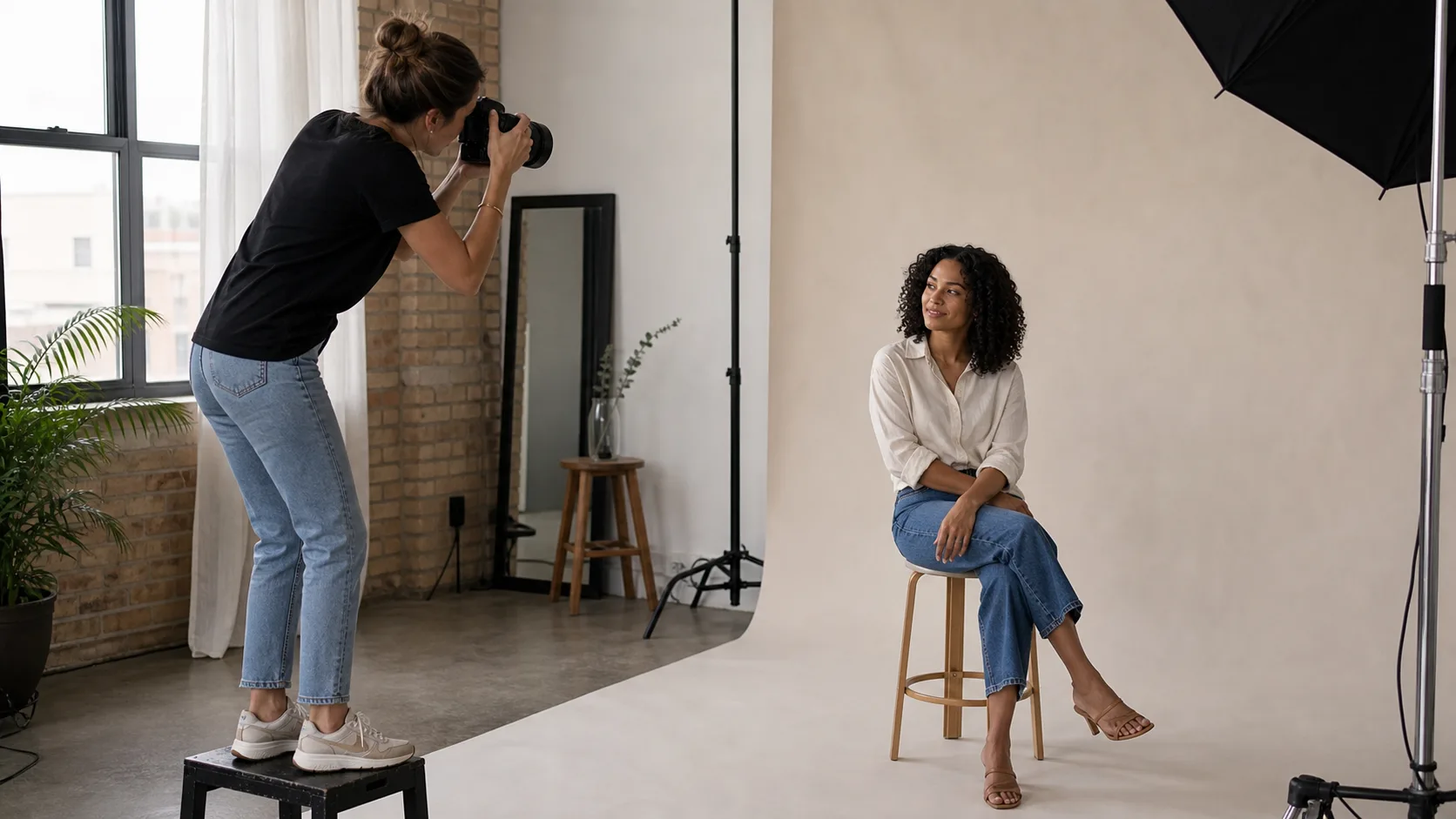 A slight high angle works best when it supports expression and comfort, not as a rigid rule.
A slight high angle can feel gentle for seated portraits, but it should not become a formula. A low angle can add presence, but too close and too low can exaggerate perspective. Close-ups need comfortable distance. Full-body portraits need camera height chosen for the pose. Environmental portraits need enough scene to explain where the person is without letting the background take over.
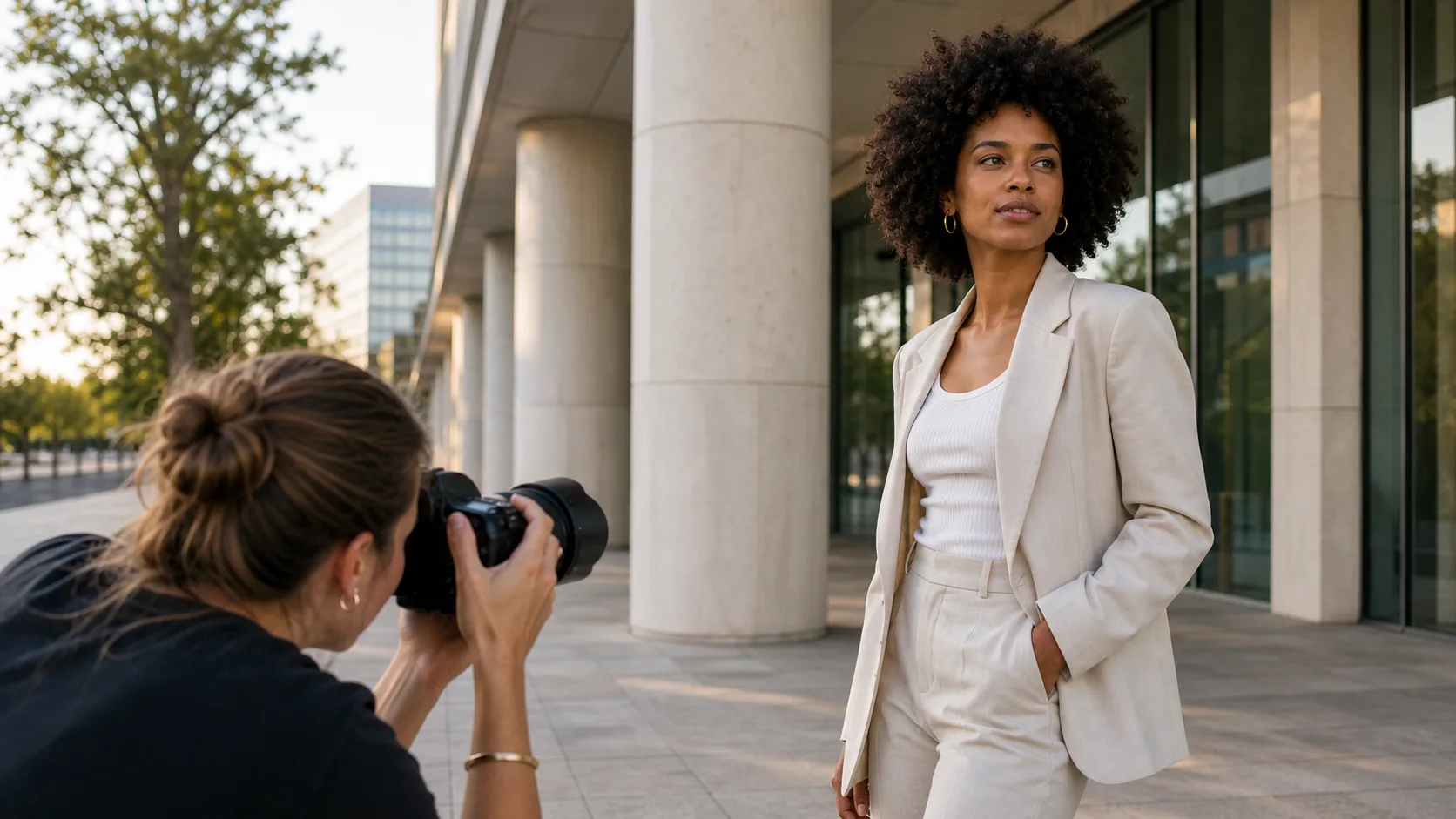 Low angles can add presence when the camera is far enough away to keep perspective believable.
Lens choice changes the field of view, but distance is what strongly changes facial perspective. A very close camera can exaggerate nearby features, especially with wider lenses. Stepping back and using a normal or short telephoto view often creates a calmer portrait. As a practical full-frame starting point, many portrait photographers like 50mm, 85mm, or similar looks; on crop-sensor cameras, use the equivalent field of view rather than treating the number as a rule.
 Distance matters as much as lens choice when you want natural portrait perspective.
Subject | Starting angle | What to watch |
|---|---|---|
Solo portrait | Begin at eye level, then vary height for mood | Do not assume one angle fits every client |
Couple portrait | Keep faces on similar planes when possible | Avoid one person becoming much closer to the lens by accident |
Group portrait | Step back, keep the camera level, and arrange faces clearly | Frame-edge stretching, hidden faces, and uneven eye lines |
Client with mobility needs | Bring the camera to the person rather than forcing a pose | Comfort, consent, accessibility, and clear communication |
Older client or expressive portrait | Use eye level and respectful distance | Over-smoothing, exaggeration, or direction that feels patronizing |
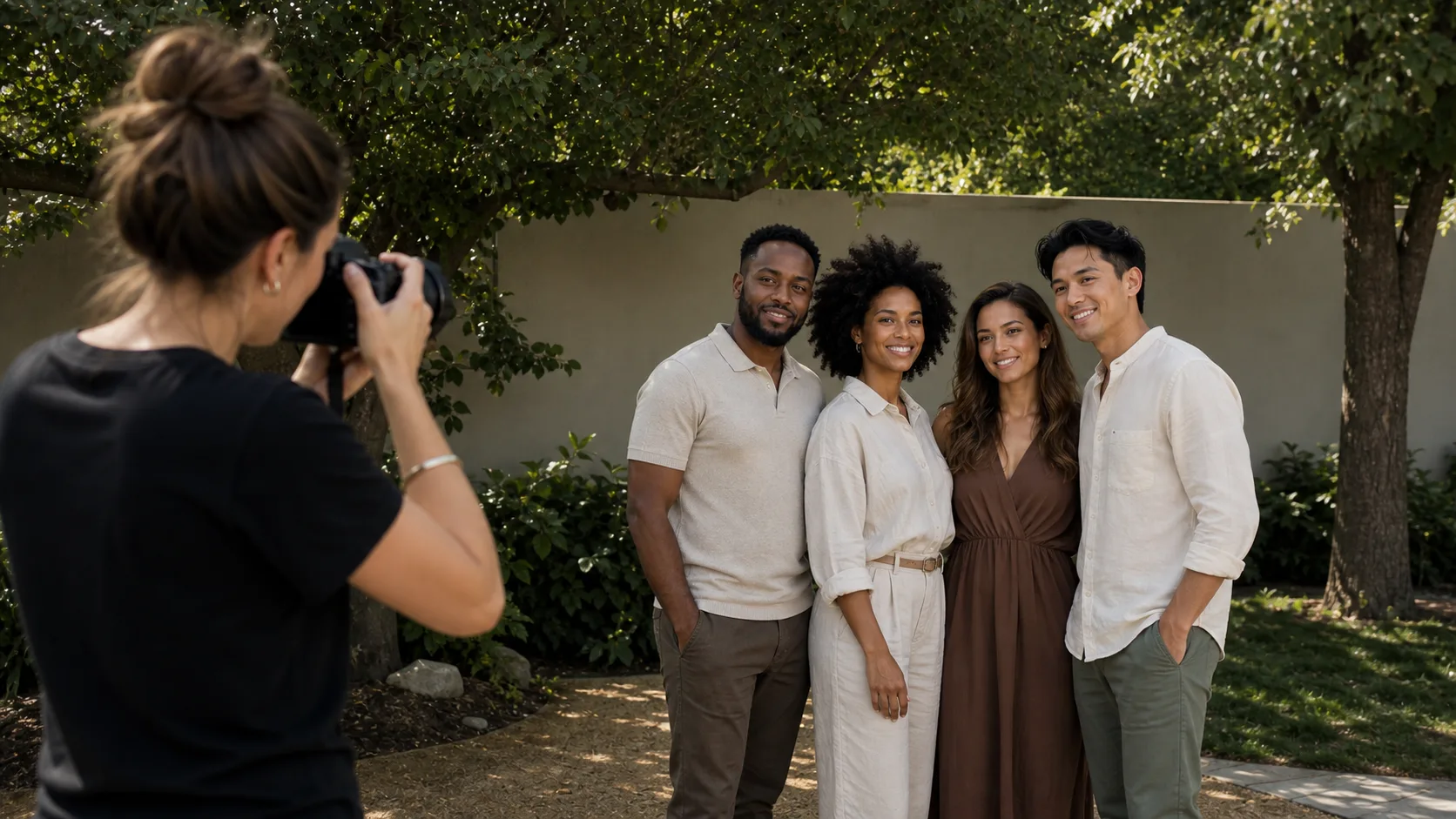 Groups usually need more distance, level framing, and clear face placement.
Mistake | Why it hurts | Fix |
|---|---|---|
Shooting every portrait from standing height | The camera may look down unintentionally. | Match camera height to the face, pose, and mood. |
Moving too close with a wide lens | Perspective can become exaggerated. | Step back first, then crop or change focal length. |
Using a low angle without purpose | The portrait can feel awkward or overly dramatic. | Use low angles for presence, architecture, or deliberate mood. |
Forgetting client comfort | The subject may look tense even if the composition is technically fine. | Explain changes, ask preferences, and keep adjustments simple. |
Cropping full-body portraits casually | Hands, feet, or joints can be cut in distracting places. | Frame intentionally and leave room for posture and movement. |
For related portrait technique guides, read portrait photography tips for better client photos, how to pose people naturally in photos, composition tips for beginner photographers.
After the session, compare angles, expressions, and consistency before sharing the final edited set. Gampi can help you present selected portraits in a clean client gallery.
Eye level is the safest starting point for many portraits, but the best angle depends on the person, pose, mood, setting, and intended use.
Eye level is often a strong choice because it feels direct and respectful. It is not mandatory, but it is a useful baseline before trying higher or lower angles.
Camera height changes how the viewer relates to the subject. Higher angles can feel softer or more observational, while lower angles can add presence; both need intention and client comfort.
Natural portraits usually come from comfortable direction, eye-level or gently varied camera height, enough distance, and expressions that fit the person.
Lens choice changes framing, but camera distance strongly affects perspective. A camera placed too close can exaggerate nearby features; stepping back often gives a calmer portrait.
A practical, inclusive posing guide for helping clients, couples, friends, models, and groups feel comfortable and look natural in photos.
A practical guide to natural pet photos: calm setup, window light, pet-level angles, dog and cat movement, autofocus, owner help, and humane pacing.
Learn how to take better candid photos with practical observation habits, timing cues, flexible camera settings, respectful distance, and a simple checklist for real moments.