
How to Take Better Travel Photos
A practical travel photography guide for better planning, light, composition, people, details, story, and stronger final photo sets.
Photography Tips
4 min read

Published July 4, 2026 | 9 min read
The best landscape photography tips for beginners are simple to say and slower to practice: chase useful light, simplify the frame, build depth with foreground-middle-background layers, keep the horizon intentional, expose for the brightest important detail, check focus before leaving, respect weather and terrain, and edit with restraint. A stronger landscape photo usually comes from where you stand, when you wait, and what you exclude.
 Beginner landscape photography improves fastest when light, position, foreground, and patience work together.
Light is the quiet engine of landscape photography. Sunrise and golden hour can give raking light, long shadows, and warm color, but they are not the only useful times. Clouds can become a giant softbox. Harsh sun can work for graphic shadows, desert geometry, white surf, and hard-edged cityscapes. Blue hour can make water, glass, snow, and distant hills feel calm without turning the scene sugary.
 Good landscape light is often oblique, broken, or weather-softened. It does not have to be a perfect sunset.
Light situation | What it can do | Beginner move |
|---|---|---|
Sunrise | Low light can skim ridges, water, grasses, and city edges before crowds arrive. | Set one composition early and wait for the light to cross the subject. |
Golden hour | Warm side light adds shape and separation to mountains, forests, and coastlines. | Turn slightly until shadows create form instead of flattening the view. |
Clouds | Thin cloud softens contrast; broken cloud can spotlight one part of the scene. | Watch the bright gaps and be ready when the subject is briefly illuminated. |
Harsh sun | Strong contrast can make sand, snow, architecture, and rock strata graphic. | Use simpler shapes and protect highlights instead of trying to reveal every shadow. |
Blue hour | Cool ambient light smooths water, city reflections, and misty forests. | Use a tripod or raise ISO carefully as shutter speeds lengthen. |
Landscape composition is less about collecting tricks and more about arranging distance. A useful foreground tells the viewer where they are standing. A middle ground gives the eye a place to travel. A background supplies scale, weather, or destination. Leading lines, shore curves, fences, paths, shadows, rivers, and bridge rails can guide that movement, but they should not bully the frame.
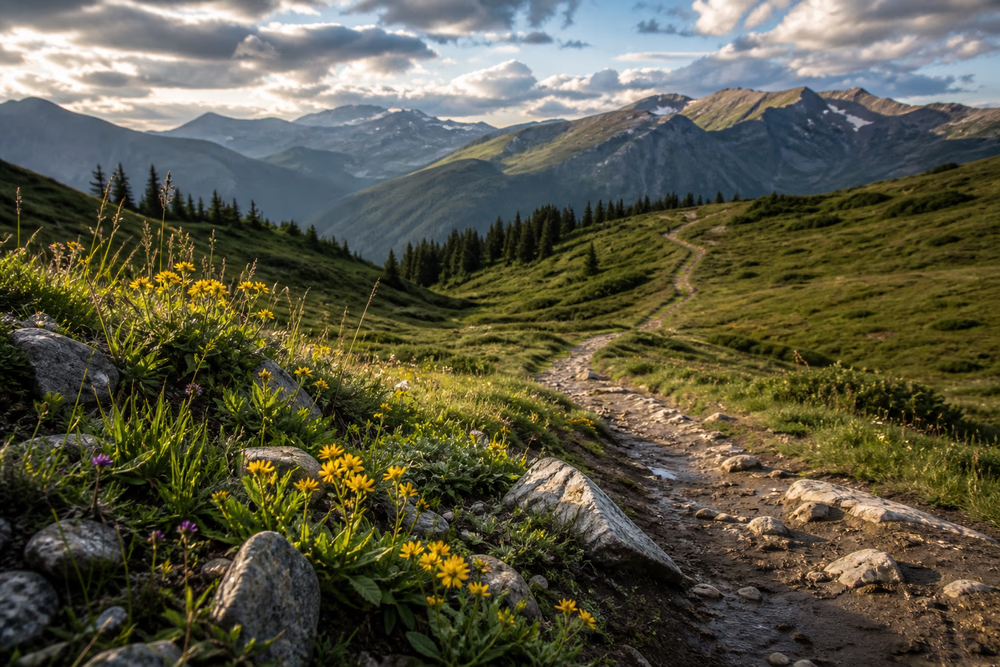 Foregrounds work best when they feel discovered in the scene, not shoved in front of the lens.
 Cityscapes are landscapes too. Level horizons, reflections, and clean lines can do more than extra saturation.
For deeper composition practice, read how to create depth in photos and how to use leading lines in photography. Those skills carry directly into beginner landscape photography, whether you are working with a trail, a harbor wall, a city bridge, or a line of trees.
There is no single best landscape setting. The right choice depends on wind, light, handheld stability, tripod use, moving water, depth, and whether you want texture or blur. Treat settings as field notes, not commandments. Make one test frame, magnify the important detail, then adjust deliberately.
 A tripod is helpful in low light and careful composition, but it is not a badge of seriousness. Use it when it solves a real problem.
Situation | Example starting point | Adjust when |
|---|---|---|
Bright handheld landscape | ISO 100-400, f/5.6-f/11, shutter fast enough for your lens and stance | Raise shutter speed if wind, fatigue, or a long lens causes blur. |
Tripod at sunrise or blue hour | ISO 100, f/8-f/11, shutter speed as needed | Use a timer or remote release, and turn off stabilization if your camera/lens recommends it on a tripod. |
Foreground-to-background sharpness | f/8-f/11 with focus placed around the important middle distance | Check near foreground at full size. If it is soft, refocus or consider focus stacking later. |
Moving water | Fast shutter for texture, slower shutter for blur | Use a tripod for longer exposures and avoid standing in unsafe water. |
High contrast sky | Expose to protect the brightest important cloud or snow detail | Use exposure compensation, bracketing, or wait for softer light if the contrast is too severe. |
Focus is often more treacherous than beginners expect. Autofocus can grab a foreground branch, a raindrop, or a high-contrast edge that is not the real subject. Before leaving a location, zoom into the file on the camera and inspect the part that must be crisp: the ridge line, tree trunk, skyline, foreground flowers, or distant building.
Weather can make a plain landscape lyrical: fog separates trees, rain polishes stone, broken cloud paints hills, and wind gives grasses a visible pulse. It can also make a location unsafe. Check the forecast, route, tides, daylight, trail condition, and exit path before you decide that one dramatic view is worth the trouble.
 Bad weather can improve a photograph, but it should not erase basic judgment about footing, water, wind, and daylight.
For wet conditions, pair this guide with tips for photographing in rain or bad weather. The best outdoor photography tips are the ones you can repeat safely.
Mistake | What it does to the photo | Fix |
|---|---|---|
Shooting the view before finding the subject | The frame has scenery but no reason for the viewer to stay. | Name the subject first, then compose around it. |
Using a foreground just because it is close | Random rocks, weeds, and branches become visual debris. | Keep foregrounds that add direction, scale, texture, or atmosphere. |
Centering the horizon by habit | Sky and land compete without intention. | Give more space to whichever part is stronger: sky drama or land structure. |
Letting the sky blow out | Cloud texture disappears and the image feels brittle. | Expose for important highlights or wait for softer light. |
Making every edit too saturated | The scene becomes garish and less believable. | Reduce saturation, compare against memory, and keep local contrast natural. |
Leaving too soon | The best light often arrives after the obvious frame. | Wait through a cloud break, wind lull, or blue-hour shift when conditions are safe. |
Ignoring the return route | Good light turns into a stressful hike back. | Plan the walk out before sunset, weather, or tide changes. |
Landscape editing should clarify the experience of the place. Straighten the horizon, correct exposure, recover believable highlights, tame color casts, guide attention with modest local adjustments, and remove only distractions that do not change the truth of the scene. Heavy clarity, lurid greens, cyan shadows, and copper skies can make a beginner file look ornate but hollow.
 A landscape story is built in the edit as much as in the field: wide scene, detail, weather, scale, and quiet pauses.
After the shoot, choose a concise sequence rather than every competent frame: an opener, two or three strong variations, one detail, one weather or light moment, and a closing image. If you want more photography recommendations, browse the Gampi photography guides and keep building the habits that make outdoor work calmer.
When your final selects are ready, use Gampi to arrange the strongest landscape photos into a simple gallery or portfolio story.
Beginners take better landscape photos by choosing useful light, simplifying the subject, building foreground-middle-background depth, keeping horizons intentional, checking focus and exposure, planning for weather, and editing with restraint.
There is no universal best setting. A common starting point is ISO 100-400, f/8-f/11, and a shutter speed fast enough for handheld work or as long as needed on a tripod. Adjust for wind, water movement, brightness, depth of field, and whether the camera is stable.
You do not always need a tripod for landscapes. It helps at sunrise, sunset, blue hour, long exposures, careful framing, and focus stacking, but handheld photos can be excellent in good light when shutter speed and stability are safe.
The best light is light that reveals shape, depth, and atmosphere. Sunrise, golden hour, broken clouds, soft overcast, blue hour, and even harsh sun can work when the composition fits the light.
Create depth by using a meaningful foreground, a clear middle ground, and a background with scale or atmosphere. Paths, shorelines, rivers, bridge rails, shadows, haze, and small figures can all help the viewer feel distance.
A practical travel photography guide for better planning, light, composition, people, details, story, and stronger final photo sets.
A supportive guide to blurry photos, missed focus, exposure problems, distracting backgrounds, weak composition, stiff posing, over-editing, and better practice habits.
Learn practical golden hour photography tips for planning, exposure, portraits, backlight, side light, silhouettes, lens flare, composition, and final image selection.